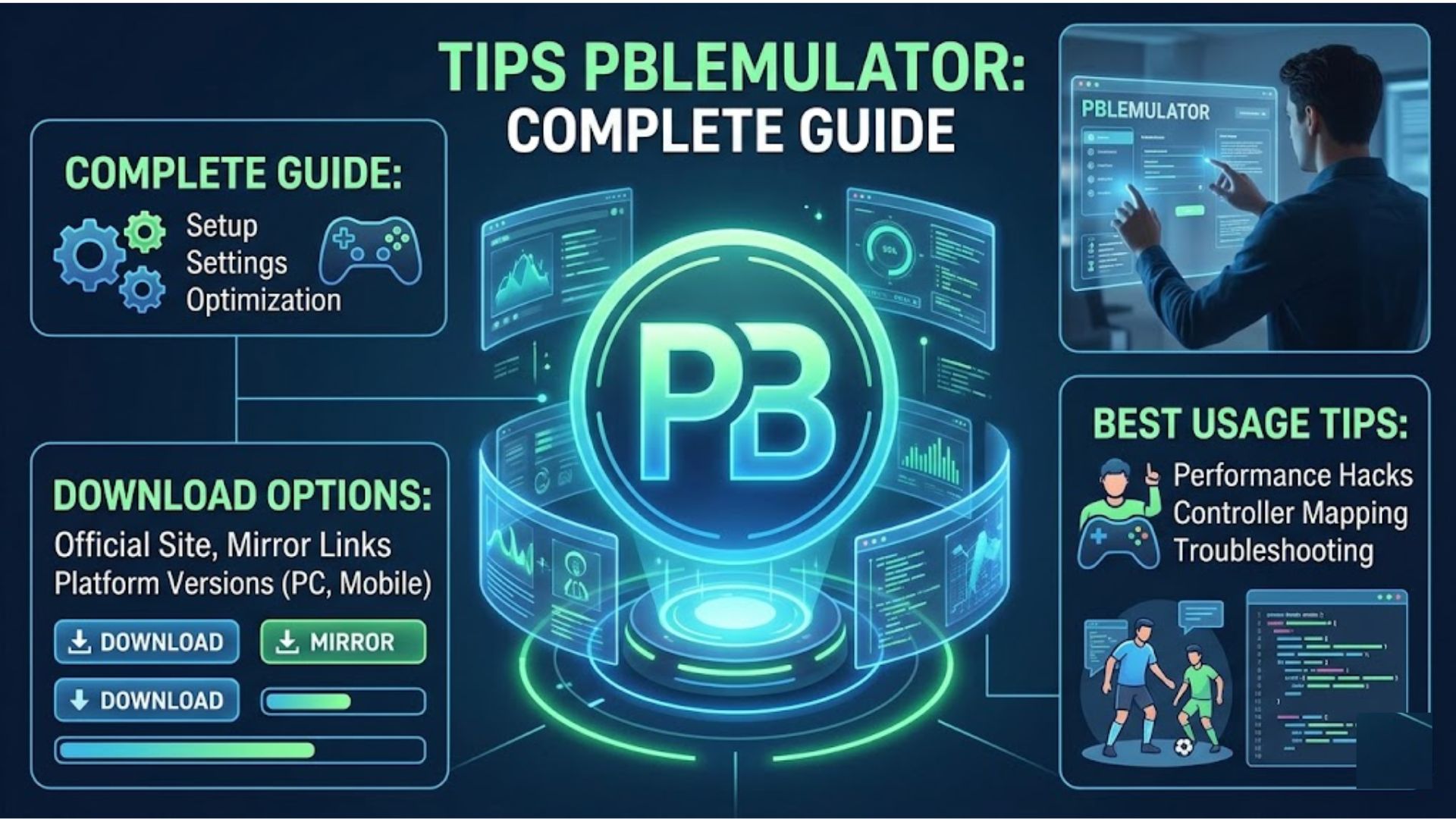
The demand for emulators has grown rapidly in recent years as users look for flexible ways to test applications, simulate devices, and explore networking environments without requiring physical hardware. One of the emerging search trends is tips pblemulator, which often refers to guides, tricks, and emulator usage methods for PCs, Android devices, and networking tools like TP-Link and D-Link simulators. Whether you are a beginner or an advanced user, understanding how to use emulators effectively can save time, reduce costs, and improve productivity.
This article provides a comprehensive overview of tips pblemulator, including emulator tips for PC, Android, APK usage, TP-Link emulator login, passwords, and D-Link emulator information. It also includes practical advice and frequently asked questions to help you get started.
What is Tips Pblemulator?
Tips pblemulator generally refers to helpful strategies, tutorials, and best practices for using different types of emulators. An emulator is software that mimics another device or system, allowing users to run programs designed for different platforms. For example, you can run Android apps on your PC or simulate a router interface for learning networking concepts.
Users search for tips pblemulator when they want:
- Faster performance on PC emulators
- Guidance for Android emulator installation
- Help with emulator APK files
- TP-Link and D-Link router simulation tutorials
- Login credentials and troubleshooting tips
Understanding these aspects allows users to maximize emulator performance and avoid common issues.
Tips Emulator for PC
Running emulators on a PC is one of the most popular use cases. Whether you want to test mobile apps, simulate networks, or play games, using an emulator on a computer provides more power and flexibility.
Here are some essential tips for using emulators on PC:
Optimize Your System
Make sure virtualization is enabled in your BIOS settings. This significantly improves emulator performance. Also, allocate enough RAM and CPU cores within emulator settings for smoother operation.
Choose Lightweight Emulators
If your system has limited resources, select lightweight emulator software. This reduces lag and prevents system crashes during heavy usage.
Update Graphics Drivers
Outdated drivers can cause emulator performance issues. Updating GPU drivers ensures better rendering and smoother interface navigation.
Disable Background Applications
Close unnecessary programs while running emulators. This frees system resources and improves responsiveness.
Adjust Resolution Settings
Lowering emulator resolution reduces GPU load and enhances speed, especially on older PCs.
Using these tips ensures stable emulator performance and minimizes delays.
Tips Emulator Download
Downloading emulators safely is important to avoid malware or corrupted files. Follow these guidelines:
- Always download from official or trusted sources
- Check file size and version details
- Scan files with antivirus software
- Avoid modified or cracked emulator packages
- Read user reviews before downloading
Additionally, ensure that the downloaded emulator supports your operating system version. Installing incompatible versions may cause crashes or errors.
Tips Emulator for Android
Android emulators are widely used for testing apps and running mobile applications on other devices. Here are some useful tips:
Enable Developer Options
Enabling developer options allows better debugging and testing functionality.
Allocate Storage Carefully
Emulators often require large storage space. Allocate enough internal memory during setup to avoid installation failures.
Use Hardware Acceleration
Hardware acceleration improves speed and responsiveness. Enable it in emulator settings if available.
Keep Apps Updated
Updating apps inside the emulator prevents compatibility issues.
Clear Cache Regularly
Clearing cache helps maintain performance and prevents slowdowns over time.
These tips improve stability and enhance user experience on Android emulators.
Tips Emulator APK
APK files allow manual installation of applications on emulators. When using APK files, follow these tips:
- Download APKs from trusted sources
- Verify file signatures
- Avoid outdated APK versions
- Check compatibility with emulator architecture
- Install one APK at a time to prevent conflicts
Installing APKs correctly ensures smooth functioning and prevents crashes.
TP-Link Emulator Overview
A TP-Link emulator simulates the router interface, allowing users to practice configuration without needing actual hardware. It is commonly used by students, technicians, and network learners.
Benefits include:
- Learning router setup safely
- Testing network configurations
- Practicing troubleshooting steps
- Understanding interface layout
These simulators replicate real router settings, making them valuable learning tools.
TP-Link Emulator Login Tips
Logging into a TP-Link emulator usually follows these steps:
- Open the emulator in your browser or software
- Enter the default IP address
- Input login credentials
- Access the dashboard
If login fails, refresh the emulator or clear browser cache. Ensure you are using correct credentials and supported browser versions.
TP-Link Emulator Password
Most TP-Link emulators use default credentials. Common login combinations include:
- Username: admin
- Password: admin
Some versions may use:
- Username: admin
- Password: password
It is recommended to change the password after login for security practice. This helps simulate real-world configuration scenarios.
D-Link Emulator Guide
D-Link emulators function similarly to TP-Link simulators. They replicate router settings for educational purposes.
Features typically include:
- Wireless configuration
- LAN settings
- Security options
- DHCP setup
- Firmware update simulation
Using a D-Link emulator helps users understand network configuration without physical devices.
Best Practices for Using Network Emulators
Here are general tips for both TP-Link and D-Link emulators:
- Use updated browser versions
- Avoid multiple sessions simultaneously
- Reset emulator if settings conflict
- Document configuration changes
- Practice step-by-step setup
Following these practices improves learning outcomes and prevents errors.
Common Issues and Troubleshooting
Users may encounter the following issues:
Emulator Not Loading
Clear browser cache or restart software.
Login Credentials Not Working
Try default username and password combinations.
Slow Performance
Reduce resolution or close background programs.
APK Installation Failure
Check compatibility and file integrity.
Network Simulation Errors
Reset emulator to default settings.
Solving these issues ensures smoother emulator usage.
Advantages of Using Tips Pblemulator
Using tips pblemulator strategies provides several benefits:
- Improved emulator performance
- Faster troubleshooting
- Better learning experience
- Reduced hardware dependency
- Safe testing environment
These advantages make emulators essential tools for students and professionals.
Conclusion
Tips pblemulator is a valuable concept for anyone using emulators on PC, Android, or networking simulations. By applying optimization techniques, safe download practices, and proper login methods, users can maximize performance and efficiency. Whether working with APK files, TP-Link emulator login, or D-Link simulations, following best practices ensures smooth and reliable operation.
Understanding emulator functionality and applying practical tips helps users learn faster, troubleshoot efficiently, and create a stable testing environment without requiring physical devices.
FAQs
What is tips pblemulator?
Tips pblemulator refers to helpful guidance and best practices for using different emulators effectively on PC, Android, and networking simulations.
How can I download a tips emulator safely?
Download only from trusted sources, scan files with antivirus software, and check compatibility before installation.
What is the default TP-Link emulator login?
Most TP-Link emulators use admin as both username and password.
Can I install APK files on emulators?
Yes, APK files can be installed manually on emulators, but ensure they come from trusted sources.
Why is my emulator running slow?
Slow performance may occur due to insufficient RAM, disabled virtualization, or background applications.
What is a D-Link emulator used for?
A D-Link emulator is used to simulate router configuration for learning and testing purposes.
Do I need a powerful PC for emulators?
Not necessarily, but more RAM and CPU power improve performance.
Are emulators safe to use?
Yes, emulators are safe when downloaded from trusted sources and configured properly.
Can I change TP-Link emulator password?
Yes, you can change it after login to practice security configuration.
Why should I use emulator tips?
Using emulator tips improves performance, prevents errors, and enhances learning.

